
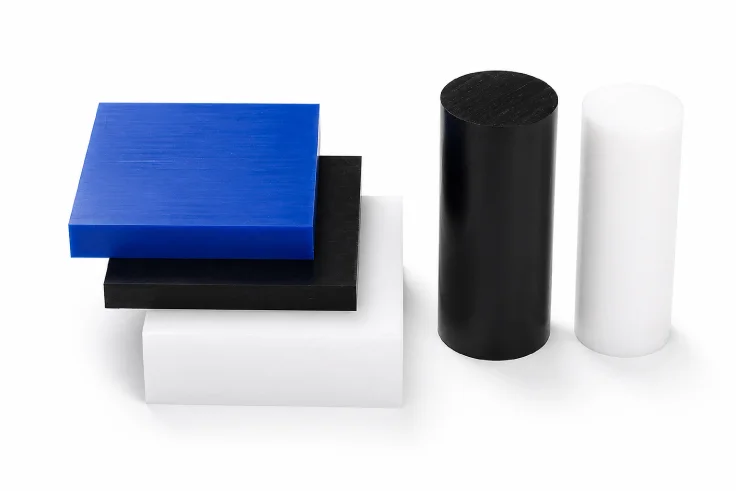
HDPE 300 (Polyethylene 300) - Frequently Asked Questions
All details about PE300, which stands out with its high chemical resistance, lightweight structure, and wide range of applications.
What is HDPE 300 (Polyethylene 300)?
HDPE 300 (High-Density Polyethylene), widely known in the market as Polyethylene 300, PE300, or HDPE, is an engineering plastic that stands out with its lightweight structure, high chemical resistance, and easy machinability. Thanks to its low moisture absorption property, high impact resistance, and hygienic structure, it is safely used in many industrial applications.
Polyethylene 300 is one of the most preferred plastic materials in the production of equipment exposed to chemicals, food processing systems, tanks, cutting boards, and machine parts.
What sectors is HDPE 300 (Polyethylene 300) used in?
HDPE 300 (Polyethylene 300) is used in many sectors where chemical resistance, hygiene, and impact resistance are important.
Main application areas:
- Food processing and packaging industry
- Chemical industry
- Water treatment systems
- Storage tanks
- Conveyor systems
- Machine manufacturing industry
- Agricultural and livestock equipment
- Marine applications
- Cutting and processing boards
Supplied in sheet and rod form, Polyethylene 300 is machined via CNC and used in the production of many different machine parts.
What are the main advantages of HDPE 300 (Polyethylene 300)?
HDPE 300 is preferred in many applications with its durability and economical structure.
Main advantages:
- Very high chemical resistance
- Low water and moisture absorption
- High impact resistance
- Lightweight structure
- Easy CNC machinability
- Weldability
- Raw material options suitable for food contact
- Low maintenance requirement
- Long service life
- Economic cost
Thanks to these features, Polyethylene 300offers a reliable solution in both industrial and hygiene-demanding applications.
What is the chemical resistance of HDPE 300 (Polyethylene 300)?
HDPE 300 is one of the engineering plastics with the highest chemical resistance. It demonstrates long-term resistance against many chemical substances.
Substances to which it shows high resistance:
- Acids
- Bases
- Salt solutions
- Types of alcohol
- Many detergents and cleaning chemicals
- Industrial chemicals
For some strong oxidizing chemicals and applications at very high temperatures, it is recommended that material selection be evaluated according to the application.
Thanks to its chemical resistance, Polyethylene 300 is widely preferred in the chemical, water treatment, and food industries.
Why should HDPE 300 (Polyethylene 300) be chosen?
HDPE 300 (Polyethylene 300) is an ideal engineering plastic for many industrial applications thanks to its lightweight structure, high impact resistance, superior chemical resistance, and easy machinability. Thanks to its low moisture absorption, hygienic structure, and long service life, it offers reliable performance while reducing maintenance costs.
Manufactured in compliance with European quality standards, Polser's HDPE 300 (Polyethylene 300) sheet and rod products offer high-quality and reliable solutions to our customers with wide size options, custom size cutting support, fast lead times, and technical consultancy services.
Choose the Right Material for Your Project
Contact us for your HDPE 300 sheet and rod needs, custom size cutting requests, or technical details.